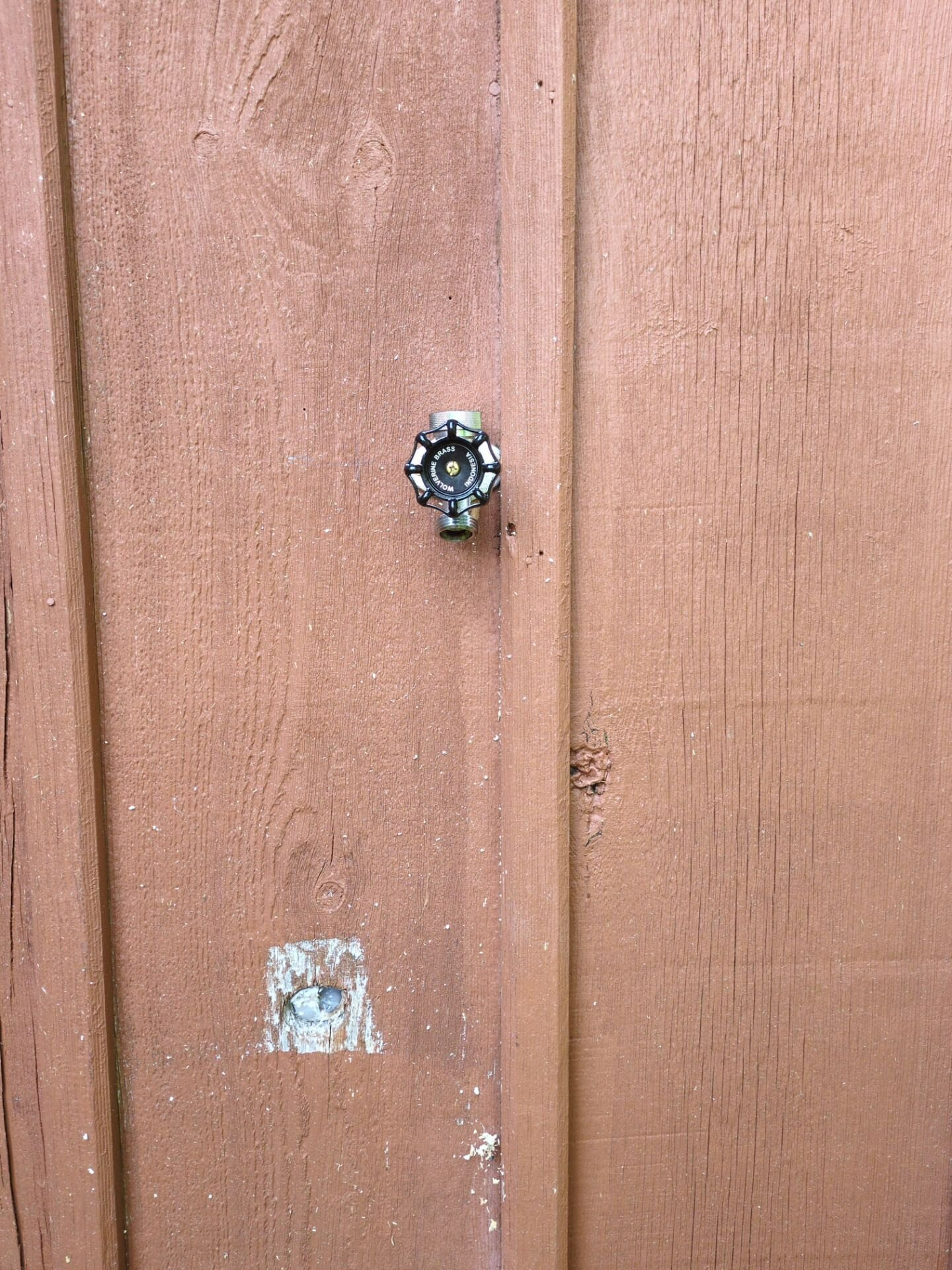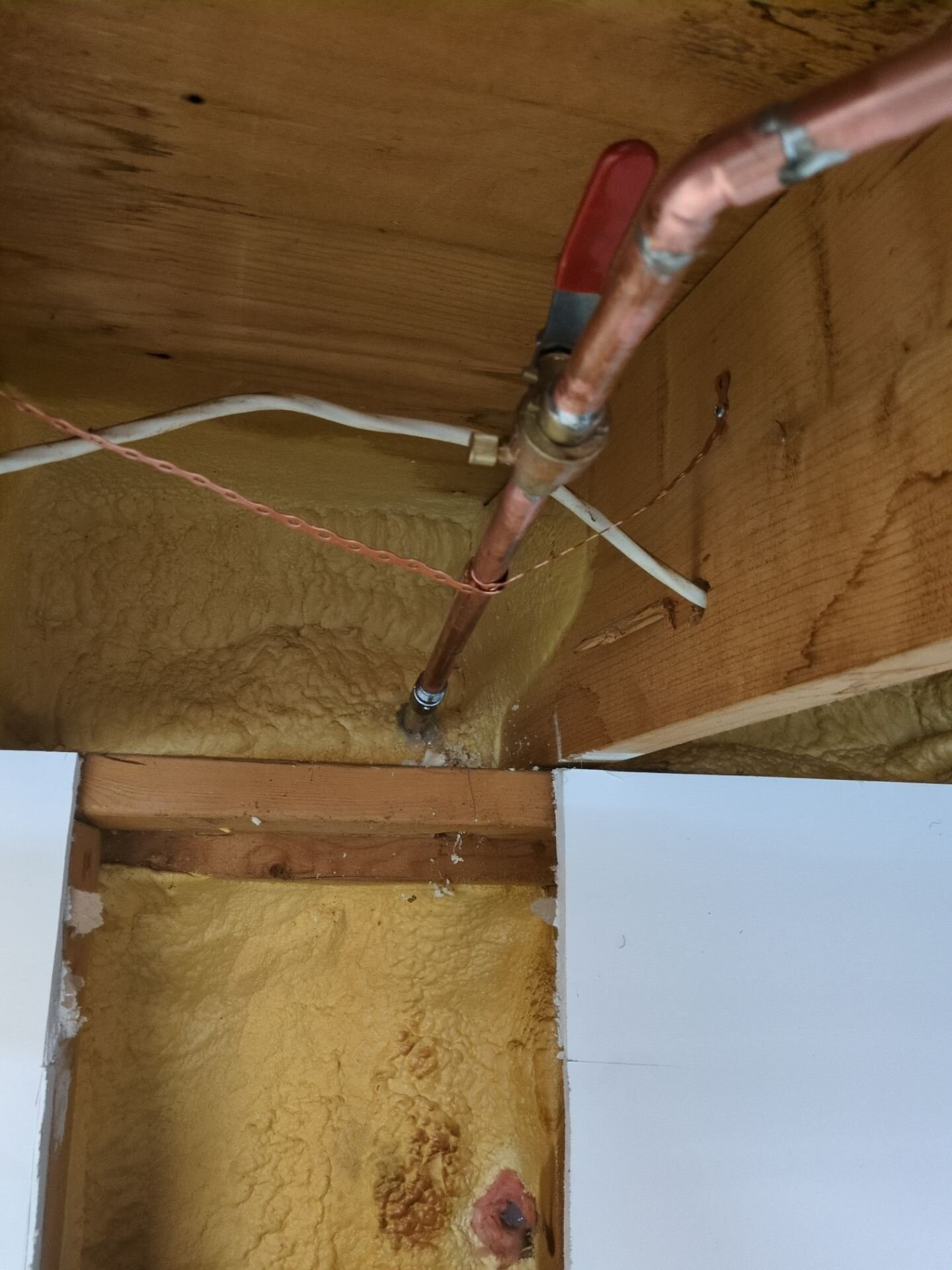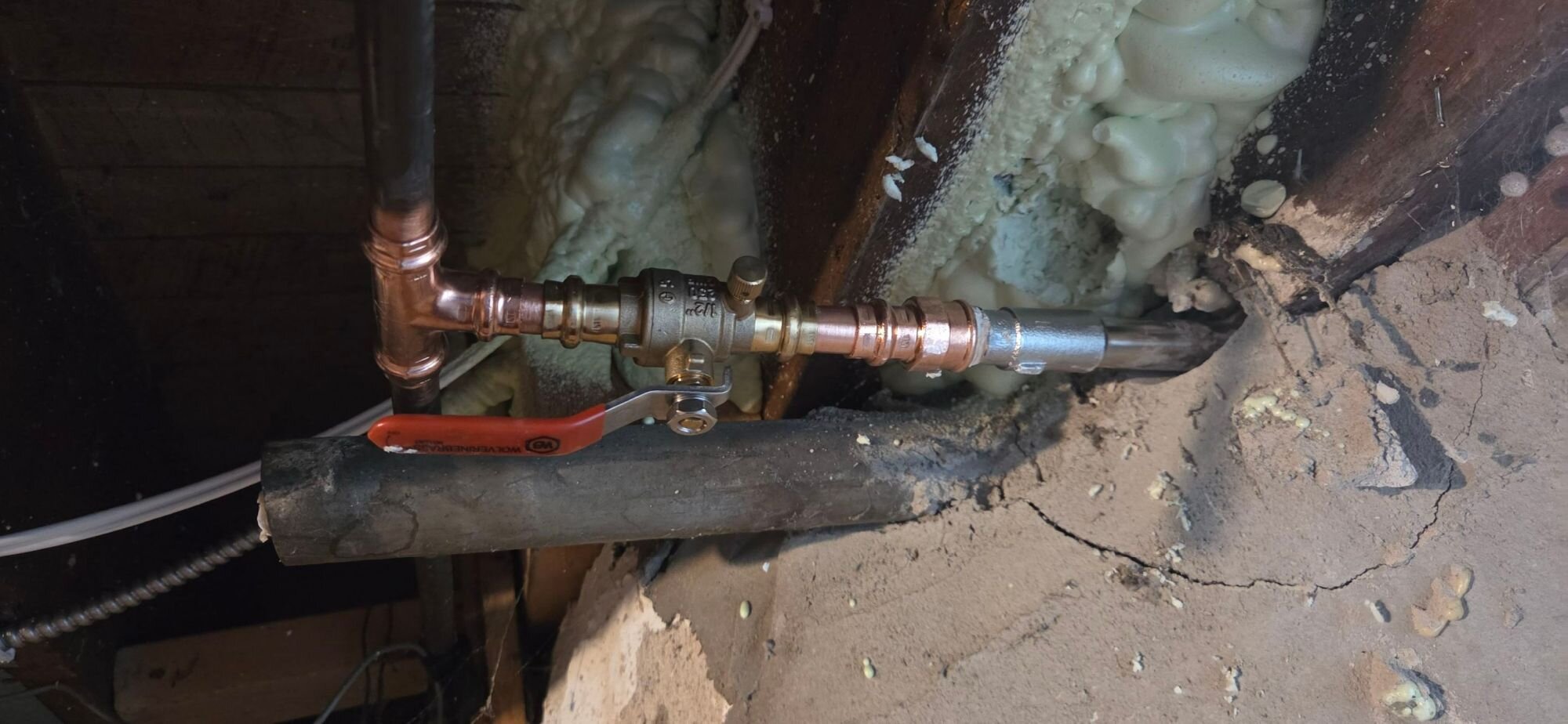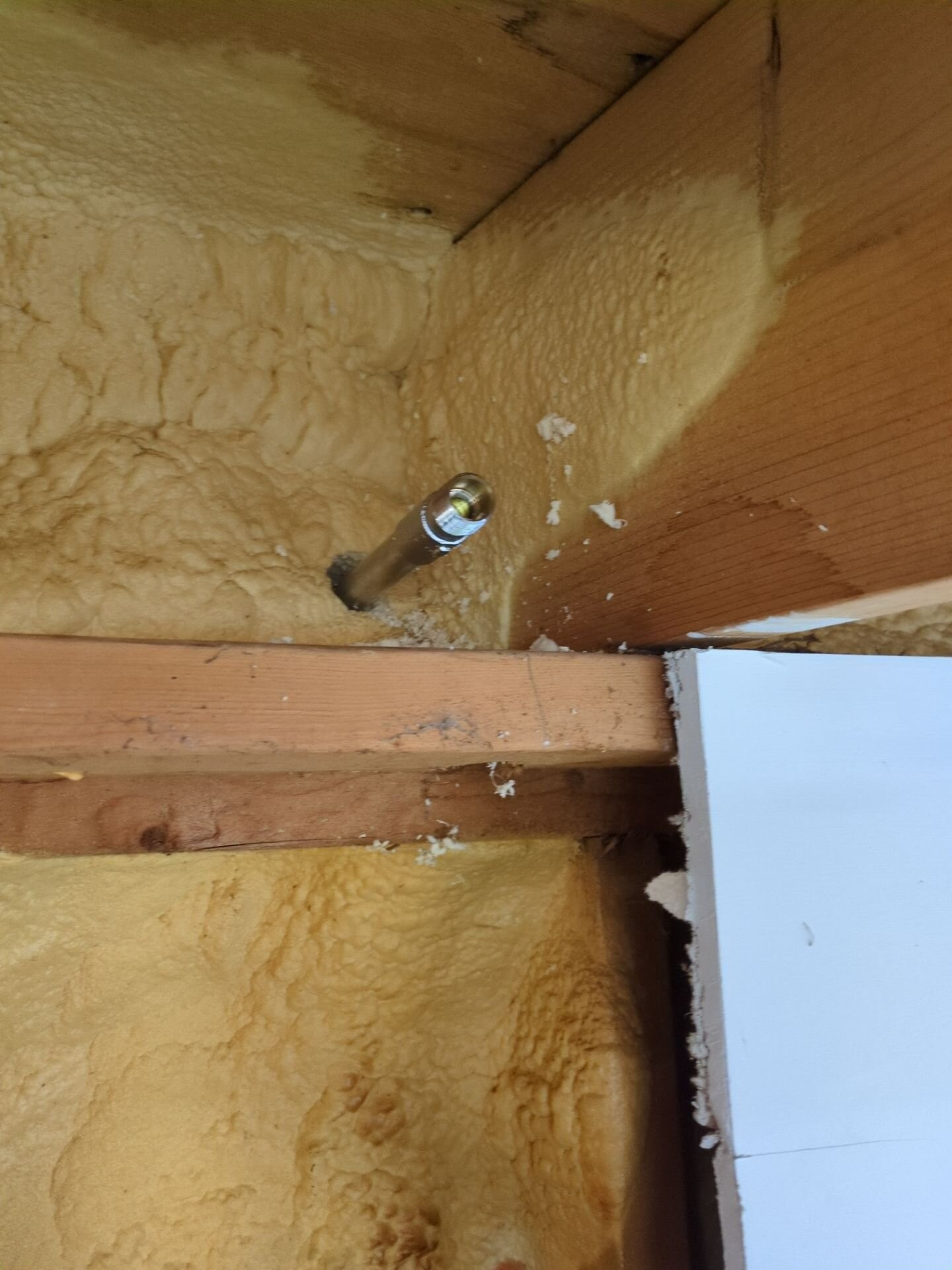
Outside Taps
Frost-free outside taps in Kitchener-Waterloo and Waterloo Region: how they work, why they can still freeze, and the five-minute fall routine that keeps water out of your basement ceiling.
New Dundee, Wilmot Township, Kitchener, Waterloo, Cambridge, Guelph, Milton, Halton Hills, Acton, Rockwood and Georgetown
The call we get every fall
A few weeks after the first hard frost, the calls start: water coming through the basement ceiling right below the outside tap. Most of the time it was a regular tap that never got shut off inside. Sometimes it was a frost-free tap that froze when a hose got left on it.
Water expands when it freezes. A full pipe in a cold wall can split, and you usually don’t find out until it thaws and runs into the wall, the insulation and the ceiling below.
How a frost-free tap works
Think of a straw with your finger on the far end. A regular outside tap stops the water right at the outside wall, so the pipe behind it stays full all winter inside the cold wall. A frost-free tap looks the same from outside, but its valve sits at the far end of a long stem, inside the heated part of the house.
The science, in one line: a frost-free sillcock (frost-proof hose bibb) places the compression valve inside the building envelope and relies on gravity drainage of the stem; most also carry a vacuum breaker to stop backflow from the hose.
Why a frost-free tap still freezes
Frost-free does not mean freeze-proof. When one splits, it is almost always one of these.
What’s going on: A connected hose traps water in the stem, so it can’t drain.
How we know: The split is usually just behind the handle, and the hose is still attached.
What we do: Replace the tap and the damaged pipe. Then make hose-off part of your fall routine.
What’s going on: The stem needs a slight slope down toward the outside so water runs out. Without it, water sits in the stem.
How we know: We check the slope from inside: water should run out of the spout, not back into the wall.
What we do: Reset the tap with the right slope, installed to good plumbing practice and plumbing code.
What’s going on: If the valve ends up in the cold part of the wall, the tap is not really frost-free.
How we know: We measure the wall and see where the valve sits.
What we do: Install a tap with a longer stem, sized to your wall.
What’s going on: If the tap drips after you close it, water keeps trickling into the stem and can freeze there.
How we know: It drips, or water keeps running out of the spout long after you close it.
What we do: Repair or replace the tap before winter.
What’s going on: Older homes often have a regular tap with a separate shut-off valve just inside. If that valve is left open, the tap freezes.
How we know: A small valve on the pipe right behind the wall, inside the basement.
What we do: Close the inside valve every fall, or swap to a frost-free tap.
Fall checklist
What it costs
All prices plus HST. You get the number before anything starts.
| Job | Price |
|---|---|
| Outside taps | |
| Replace an existing outside tap with a frost-free one | $300 |
| Add a new frost-free outside tap where you need water | About $1,000 |
| Add a hot and cold outside tap | About $1,500 |
All prices plus HST. See all our hookup and outside tap prices.
Call us before you open the ceiling. We will tell you whether it’s the tap, the pipe, or both.
Locally owned since 2018
Questions we get asked
No, that’s the point of it. There is no separate inside valve to close. Take the hose off and make sure the tap drains when you turn it off. If you find a small valve on the pipe right behind the wall inside, you may have an older regular tap, and that valve needs to be closed every fall and the outside one opened.
No. A connected hose stops the stem from draining, and the water left inside can freeze and split the tap or the pipe inside the wall. This is the most common reason a frost-free tap fails. Take the hose off before the first hard frost.
Often you won’t until spring. When you turn the tap on for the first time, watch the wall and the basement ceiling under it. Water inside, or very weak flow outside, usually means a split. Turn it off and call us before it soaks the drywall.
A frost-free tap usually has its handle at a right angle to the wall, and the pipe inside runs straight back through the rim joist with no separate shut-off right behind it. If you see a small valve on the pipe just inside the wall, you likely have the older kind.
Replacing an existing outside tap with a frost-free one is $300 plus HST. Adding a new frost-free tap where there wasn’t one is about $1,000, and a hot and cold outside tap is about $1,500, both plus HST.
For most homes, yes. One split pipe in a finished basement means wet drywall, insulation and flooring, and that usually costs far more to put right than the tap. A frost-free tap removes the step most people forget: closing the inside valve every fall.
Before the first hard frost. Around Waterloo Region that is usually October or early November. Take the hoses off, drain the taps and check for drips while it is still mild enough to fix anything you find.
Outside Taps
Replace an old or leaking outside tap with a frost-free one for $300 plus HST.
 CALL US! 548-255-2662