Reverse Osmosis Drinking Water
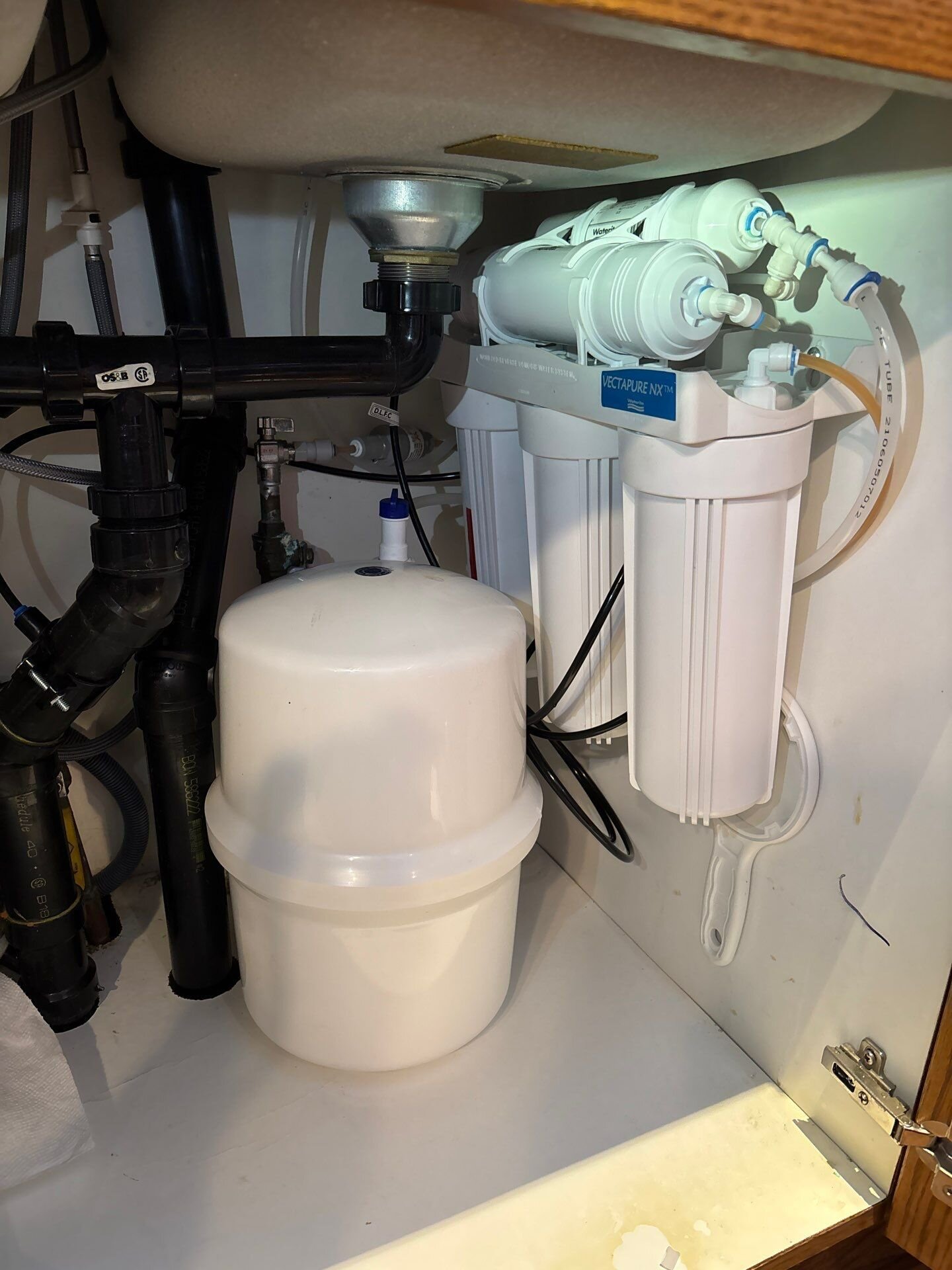
A 5-stage reverse osmosis system under your kitchen sink, installed by a licensed local plumber.
New Dundee, Wilmot Township, Kitchener, Waterloo, Cambridge, Guelph, Milton, Halton Hills, Acton, Rockwood and Georgetown
No chlorine taste or smell in your drinking water, coffee or ice.
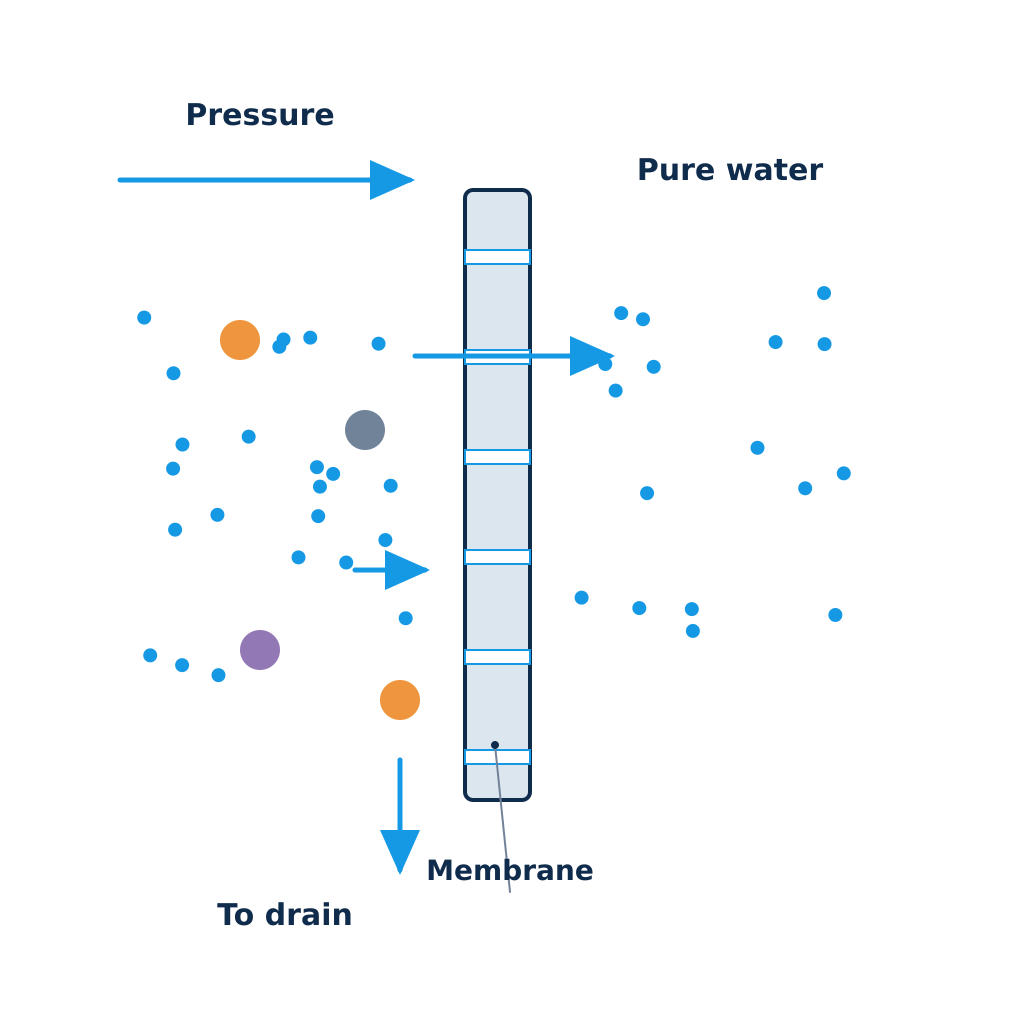
The membrane takes out most of the salts and minerals carbon filters leave behind.
Stop buying, carrying and recycling jugs and cases.
A 1:1 design sends far less down the drain than many basic units.
The problem and the fix
A softener fixes hardness. It protects your pipes, your water heater and your fixtures. What it does not do is change how your water tastes, and it leaves the dissolved solids in.
Reverse osmosis is the finishing step. It often runs to a single faucet and possibly the fridge line to give you clean, great-tasting water for drinking and cooking.
It’s free and done by phone. We go over your water, your water pressure and where the system would go, then tell you exactly what you need.
How it works
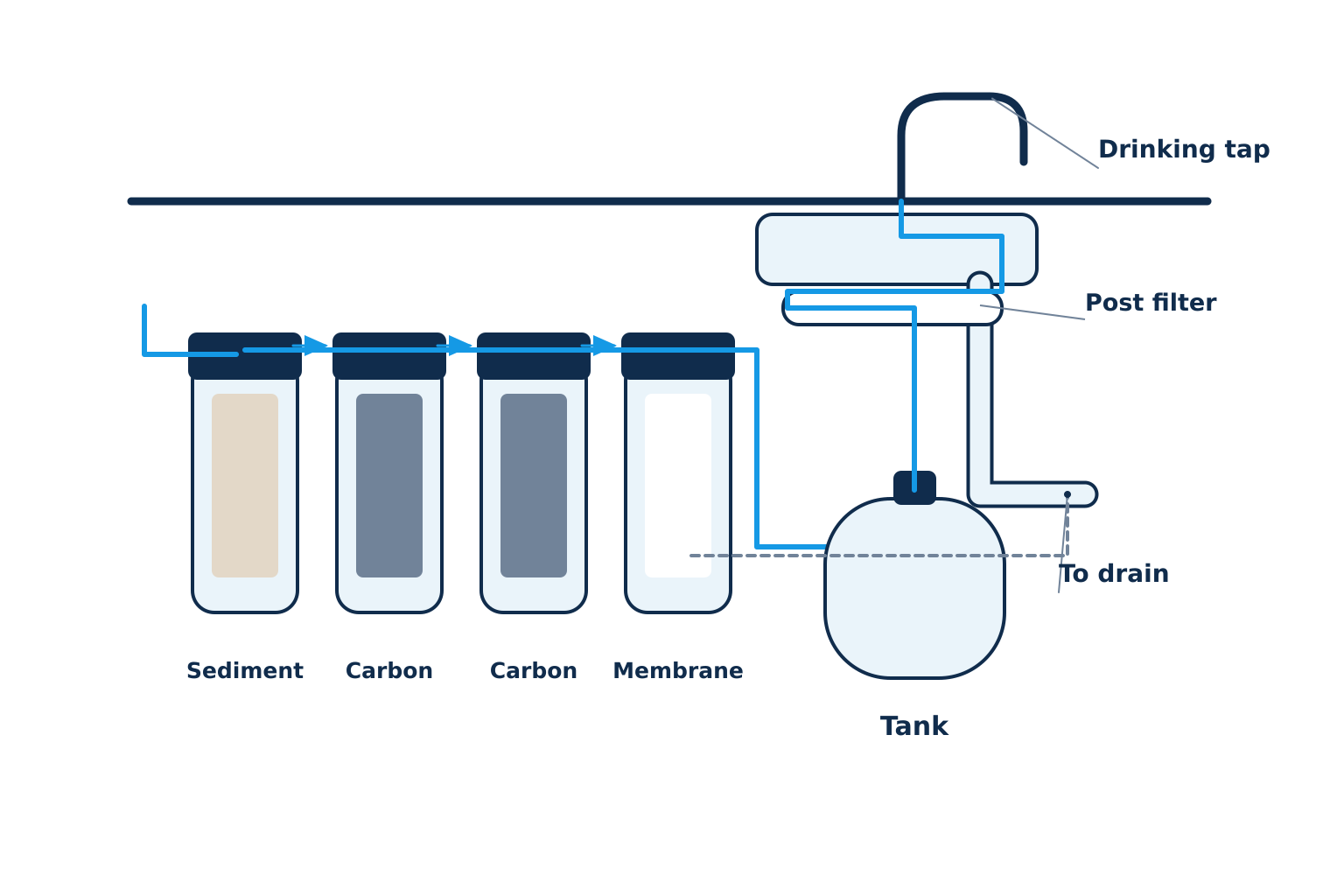
We install the Pinnacle 5-stage reverse osmosis system. Water passes through five filters in a row, each one doing a different job, then waits in a small tank under the sink until you open the faucet.
Pinnacle 5-stage RO, the specs
100 gallons a day is more than most households will ever draw from one faucet. The storage tank is NSF-certified, and the system is designed to send as little as one litre to the drain for every litre of drinking water it makes.
Why ours is different
Most RO problems we get called about come from the same few shortcuts: a small membrane, too much water down the drain, weak pre-filters, and an install that ignored the house’s water pressure and hardness. Here is how the system we install compares with what we commonly see under sinks around the region.
| What we often see on basic systems | The Pinnacle system we install |
|---|---|
| Three or more litres sent down the drain for every litre of drinking water | About one litre to drain for every litre you drink (1:1 design) |
| Smaller membranes, often rated 50 to 75 gallons a day, so the tank refills slowly | A 100 gallon a day NSF-certified membrane, so the tank is ready again quickly |
| A single light carbon stage, letting chlorine reach the membrane and wear it out early | Two carbon block stages ahead of the membrane, then a polishing filter after it |
| Plastic storage tanks with no certification listed | An NSF-certified 3.2 gallon storage tank |
| No booster pump, so output drops in low-pressure homes | We suggest the booster pump model |
| Installed on hard water with nothing ahead of it, so the membrane scales up | We check your hardness and tell you if a softener should go ahead of it |
| Sold and installed by an equipment seller | Installed by a licensed plumbing contractor, connected to code |
We are describing common shortcuts in general, not any particular company or brand.
Why we often pair it with a softener: hardness across the region, in grains per gallon
The manufacturer recommends a softener ahead of the system when hardness is over 10 grains per gallon. Most of our service area is well above that. If you already have a softener, you are set. If you do not, we will tell you honestly whether you need one first.
What it costs
~$750 to $1,200 + HST
Clear, upfront pricing
One system, one price, and the extras listed before you call.
Most RO installs are a straight under-sink job. Here is what each option costs, and what the upkeep costs after that.
Locally owned since 2018
Water treatment companies sell equipment. We are plumbers. The same licensed team that installs your softener and your water heater installs your RO, so one company stands behind the whole job.
Locally owned. Serving Kitchener-Waterloo and surrounding areas since 2018.
We had the softener replaced along with several other items. We were very pleased with the work being completed the next day. The installers were very professional and efficient.
J FGoogle review
Great communication, excellent service, great quality water softener and clean up after work.
Dominique CGoogle review
Keeps my farm water system up to date. Even drop ships me the parts I need.
Mathew MGoogle review
4.8 from 63 Google reviews
Questions we get asked
In most of our area, yes. RO treats the water at one faucet, while a softener treats the whole house. Hard water also shortens the life of an RO membrane, which is why the manufacturer recommends a softener ahead of it when hardness is over 10 grains per gallon. Kitchener, Waterloo and Cambridge run 16 to 24.
The sediment filter catches particles like dirt, sand and rust. The carbon stages reduce chlorine and organic chemicals. The membrane separates most dissolved solids, like salts and minerals, from the water.
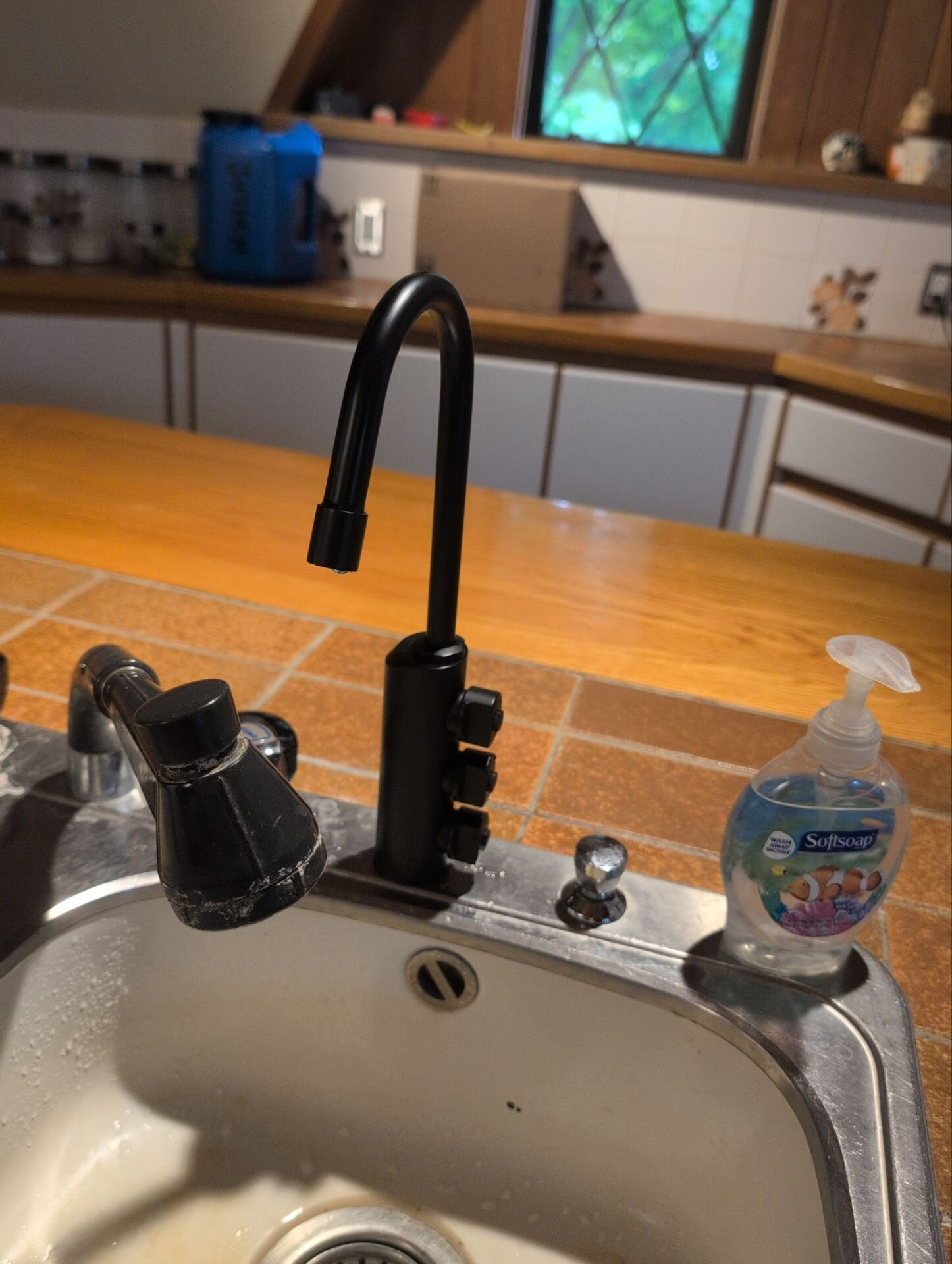
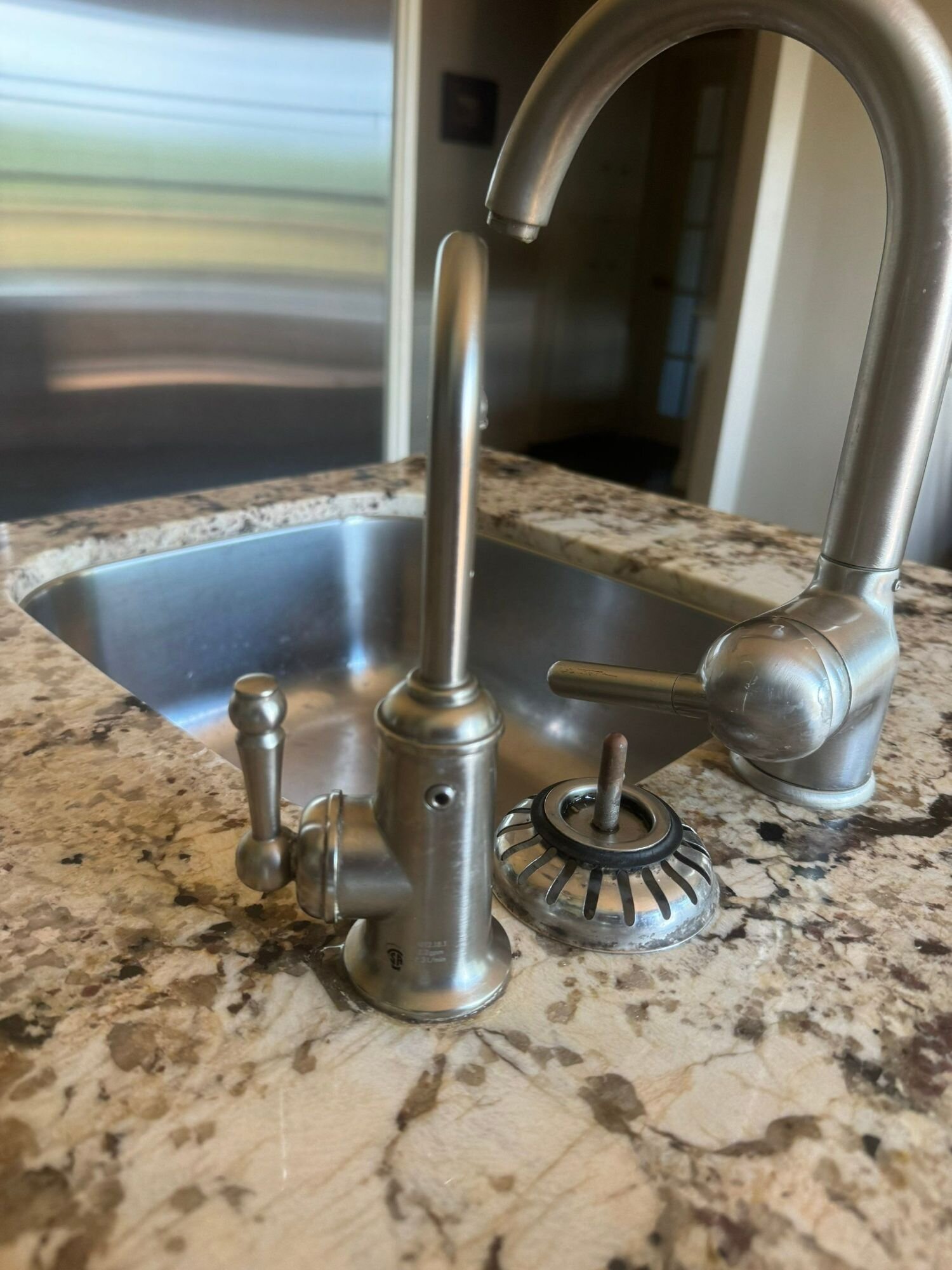
In new builds, the RO is planned for the utility space with a dedicated line run to the Kitchen and fridge. This is the preferred location when it is possible. When it is not, it is installed in the cabinet under your kitchen sink, with its own faucet on the sink or countertop. We can also run a line if the access is still available.
Each of the four filters is changed once a year: the stage 1 sediment filter (about $10), and the stage 2, stage 3 and stage 4 polishing filters (about $30 each). The membrane lasts 3 to 5 years, or until the flow slows down. A yearly filter change is $325 plus HST, filters and visit included. In a year the membrane is due, add $45 to $100, depending on the brand.
Every RO system sends some water to the drain to rinse the membrane. The Pinnacle is designed at a 1:1 ratio: about one litre to the drain for each litre of drinking water. Many basic units send a lot more than that.
Yes, with the right setup. RO needs at least 40 psi to work properly, and many wells run lower. For those homes we install the model with a built-in booster pump. Iron, sulphur and bacteria need their own treatment first.
Not sure what you need?
Municipal water testing is free, and so is our water assessment by phone. We go over your water and your pressure with you, then tell you whether you need a softener first.
Here's what to expect
A free water assessment by phone, using your area’s water data and any test results you already have.
An honest recommendation: RO on its own, RO with a softener, or neither.
The price from this page, plus anything your kitchen adds.
Reverse Osmosis Drinking Water
Clean, great-tasting water from your own tap, installed by licensed local plumbers. Book a free water assessment and start with the facts.
 CALL US! 548-255-2662